Ambulatory Phlebectomy
During a phlebectomy, the doctor makes tiny incisions in the skin under local anesthesia. Using specialized tools, the doctor detaches spider veins and other blood vessels that feed varicose veins. The detached tributaries are removed through the incisions, which are then neatly stitched closed.
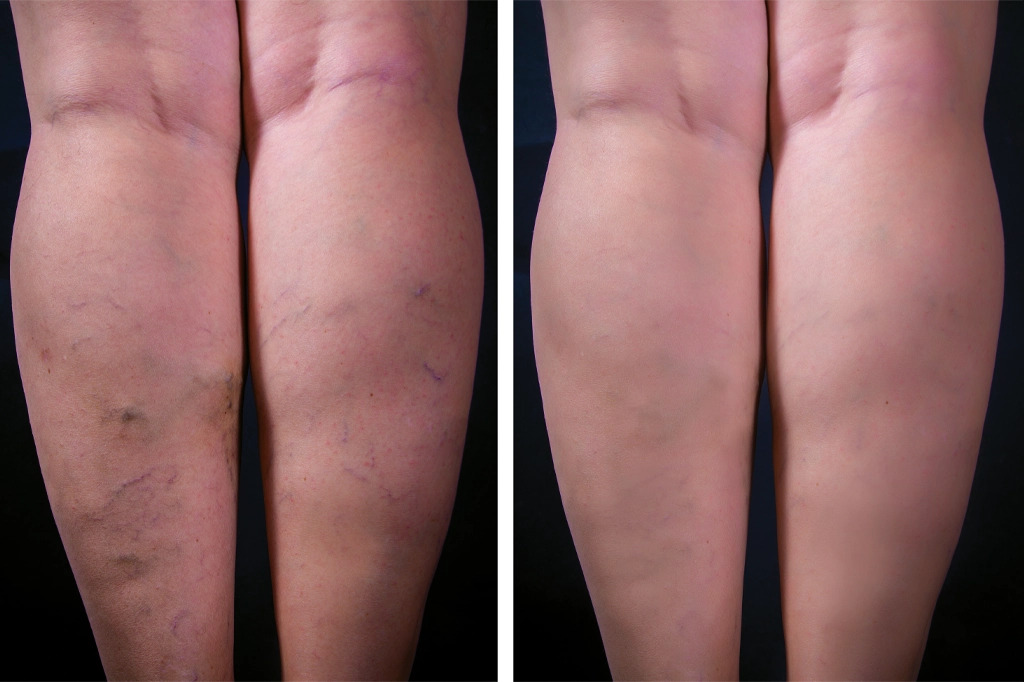
After a phlebectomy, your body automatically reroutes blood flow to healthy veins. Phlebectomies are safe, effective procedures with minimal or no scars left behind.2 They can be performed on their own or used in combination with other therapies like endovenous laser therapy.
Endovenous Laser Therapy (EVLT)
Endovenous laser therapy, also called endovenous thermal ablation (EVTA), is a common first-line treatment for varicose veins. It works by using the power of heat and can be even more effective than surgery.3
The procedure uses an ultrasound to guide a tiny cable through the body and into abnormal veins. The cable uses laser technology to apply thermal energy (heat) to the walls of the varicose vein. This heat irritates the vein, causing it to shut down and seal itself off without the need for removal.
Benefits of EVLT include:
- Comparable results to surgery without the need for general anesthesia
- Fast recovery with less pain and more complete ulcer healing
- Low complication rate
- More affordable than other varicose vein treatments4
Microfoam Ablation for Varicose Veins
Microfoam ablation has been gaining popularity as a varicose vein treatment because it is fairly affordable, offers a fast recovery, and can be repeated as needed.5
While EVLT uses heat, microfoam ablation uses medication to irritate the walls of abnormal veins. By injecting stabilized foam agents into varicose veins through a needle or catheter, doctors can stimulate abnormal veins to seal themselves off. The body compensates for this by redirecting blood to other veins, alleviating uncomfortable symptoms.
Commonly Used Agents
Varithena is an FDA-approved, body-safe foam that damages the inner lining of varicose veins so they shut down. The active agent in Varithena, polidocanol, is also available in a liquid form.
We do not use osmotic agents like hypertonic saline, which have a relatively high salt content that dehydrates the cells in varicose veins to make them collapse. It’s low risk but can be painful during injection and has higher rates of skin pigmentation.