Vertebral Augmentation: Kyphoplasty and Vertebroplasty in New Jersey

Spinal fractures are painful, debilitating, and unfortunately common in older adults. Upwards of 50% of individuals over the age of 50 develop vertebral compression fractures.1 Additionally, spinal fractures account for about 13% of all blunt trauma injuries.2

For patients with vertebral compression fractures and sacral insufficiency fractures, vertebral augmentation procedures can offer significant symptom relief while improving spinal stability.

Jump to:
Vertebroplasty vs Kyphoplasty | Who Qualifies? | FAQ

Vertebral Augmentation: Kyphoplasty and Vertebroplasty in New Jersey
vertebral augmentation

Vertebroplasty vs Kyphoplasty

Kyphoplasty and vertebroplasty are two kinds of vertebral augmentation treatments used to help spinal fracture patients. Both procedures use image-guidance to inject bone cement (polymethylmethacrylate, or PMMA) into a fractured vertebra to increase stability.

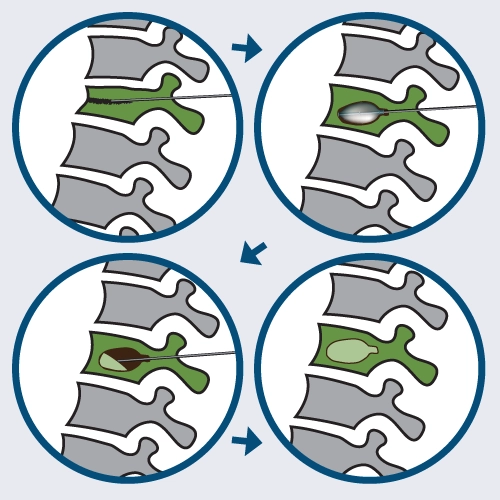
During percutaneous vertebral augmentation, a needle is inserted into the fractured bone under X-ray fluoroscopy guidance. The fast-drying, body-safe bone cement is injected into the crack or break. This provides additional strength to the spine, helping to alleviate pain and protect the spinal cord.

A balloon kyphoplasty procedure also uses image guidance to deliver bone cement to the spine. However, before the cement is injected, a medical-grade balloon is placed in the spine and inflated. As the balloon inflates, it lifts the vertebra to its original position. The balloon is deflated as bone cement is injected into the space to hold the spine in proper position and make it more stable. This is especially helpful when patients have lost vertebral height from a spinal fracture.

Who Qualifies for Vertebral Augmentation

Kyphoplasty and vertebroplasty procedures are used to treat patients with stable spinal fractures, most often as a result of osteoporosis. Most patients who undergo vertebral augmentation have had ongoing or worsening back pain which has not been solved by medications or physical therapy.3

You may also qualify for these minimally invasive procedures if you:

  • Have severe pain that prevents you from completing daily activities or moving normally
  • Have spinal fractures caused by metastatic cancer
  • Have a confirmed vertebral compression fracture
  • Have ruled out other causes of back pain

Unstable fractures that present a danger to the spinal cord are typically treated via orthopedic and/or neurologic surgery. Patients with neurological deficits, spinal cord compression, or an active infection should not get vertebral augmentation. Pregnancy and an allergy to bone cement are also contraindications for kyphoplasty and vertebroplasty.

Benefits of Kyphoplasty and Vertebroplasty

Vertebroplasty is typically less expensive and more widely available than kyphoplasty for compression fractures. Balloon kyphoplasty requires more specialized training, but may have better long-term results.4 Both procedures are safe and more effective than non-surgical treatments.

  • Outpatient procedures with same-day discharge
  • Often covered by insurance
  • No anesthesia required
  • Pain relief within 24-48 hours5
  • Low complication rate

Common Questions About Vertebral Augmentation

The best doctors for vertebroplasty and kyphoplasty in NJ are interventional radiologists. These specialists receive advanced training in minimally invasive, image-guided procedures to ensure patient safety and satisfaction.

Both kyphoplasty and vertebroplasty are safe, low-risk treatments for spine fractures.6

Both kyphoplasties and vertebroplasties can be completed in a few hours, though vertebroplasties are typically faster.

Recovery after vertebroplasty or kyphoplasty is short; most patients are able to return to daily activities within 1-2 days. Patients should wait six weeks to perform heavy lifting.

Bone cement made from polymethylmethacrylate is safe for long-term use inside the body and remains sturdy for many years.

Rare vertebroplasty and kyphoplasty side effects include pulmonary embolism, infection, and bone cement leakage.7

To speak to our staff about your spine fracture treatment options, call our NJ radiology clinic at 908-874-9236 or send us a message online.

References:

  1. Best Practices Guidelines Spine Injury. American College of Surgeons (2022). Gregory D. Schroeder MD, Alexander R. Vaccaro MD PhD MBA, William C. Welch MD FACS FAANS FICS FAANOS, et al
  2. Sayed D, Grider J, Strand N, et al. The American Society of Pain and Neuroscience (ASPN) Evidence-Based Clinical Guideline of Interventional Treatments for Low Back Pain. J Pain Res. 2022;15:3729-3832. Published 2022 Dec 6. doi:10.2147/JPR.S386879
  3. Sayed D, Grider J, Strand N, et al. The American Society of Pain and Neuroscience (ASPN) Evidence-Based Clinical Guideline of Interventional Treatments for Low Back Pain. J Pain Res. 2022;15:3729-3832. Published 2022 Dec 6. doi:10.2147/JPR.S386879
  4. Moschovaki-Zeiger O, Zini C, Marcia S, Filippiadis DK, Gangi A, Cazzato RL. ESR Essentials: Vertebral augmentation for osteoporotic fractures-practice recommendations by the Cardiovascular and Interventional Radiological Society of Europe. Eur Radiol. Published online November 3, 2025. doi:10.1007/s00330-025-12119-6
  5. Deramond H, Depriester C, Galibert P, Le Gars D. Percutaneous vertebroplasty with polymethyl methacrylate. Technique, indications, and results. Radiol Clin North Am. 1998;36:533-46.
  6. Sayed D, Grider J, Strand N, et al. The American Society of Pain and Neuroscience (ASPN) Evidence-Based Clinical Guideline of Interventional Treatments for Low Back Pain. J Pain Res. 2022;15:3729-3832. Published 2022 Dec 6. doi:10.2147/JPR.S386879
  7. Yuan WH, Hsu HC, Lai KL. Vertebroplasty and balloon kyphoplasty versus conservative treatment for osteoporotic vertebral compression fractures: A meta-analysis. Medicine (Baltimore). 2016;95(31):e4491. doi:10.1097/MD.0000000000004491