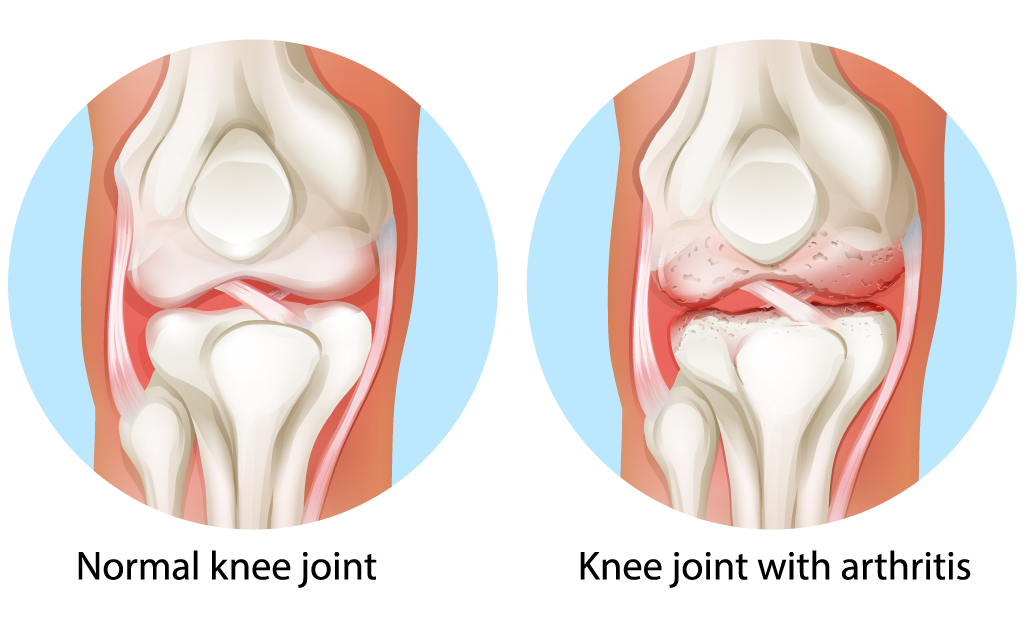
Treatments for Osteoarthritis Knee Pain
Since osteoarthritis of the knee is degenerative, treatments for knee OA depend on the disease’s stage at diagnosis and how it progresses. As first-line conservative options lose their effectiveness, more invasive treatments are recommended.
Lifestyle Changes
In early stages, the impact of osteoarthritis can be lessened through non-surgical means, sometimes without medication. Performing low-impact exercises can help strengthen the muscles around your knees, while helping you lose weight if recommended. In some cases, a physical therapist can help identify the best exercises based on your personal needs.
Assistive devices can also help reduce knee pain. Many patients wear braces or use canes to offload pressure on weight-bearing joints. Therapeutic treatments like transcutaneous electrical nerve stimulation (TENS) using machines and pads on the skin can also provide symptom relief.
Medications & Injections
Medications for knee OA focus on reducing inflammation that contribute to pain and cartilage breakdown. Over-the-counter medications like ibuprofen and acetaminophen, as well as prescription NSAIDs called COX-2 inhibitors are effective at treating osteoarthritis pain. Glucosamine and chondroitin supplements offer anti-inflammatory effects, support for cartilage, and may help keep knee joints lubricated.
In some cases, your doctor may prescribe periodic injections, which deliver medications directly to the knee joints. Corticosteroid injections are effective in providing short-term pain relief, but should not be used as a long-term treatment. Hyaluronic acid can also be injected into the knee to assist with lubrication, reducing pain while improving joint mobility.
Genicular Artery Embolization
Genicular artery embolization (GAE) is a minimally invasive treatment for knee OA performed by interventional radiologists. The procedure uses a catheter to place tiny beads in inflamed blood vessels around the knee. By redirecting blood flow to healthy vessels, GAE can reduce overall inflammation and knee pain in over 80% of patients.3
GAE is recommended for patients over the age of 40 with symptomatic knee osteoarthritis that is no longer responding to conservative management. It may be used to help patients who do not qualify for surgery, or as a way to delay the need for surgical intervention.
Surgery for Knee Osteoarthritis
Surgery is reserved for patients who have severe osteoarthritis in one or both knees, which no longer responds to other treatments. The most common procedures used in osteoarthritic patients are unicompartmental knee arthroplasties (UKA) and total knee arthroplasties (TKA)
Unicompartmental knee arthroplasty is also known as a partial knee replacement. In this surgery, doctors replace damaged cartilage in one of three compartments in the knee with medical-grade metal or plastic replicas. UKA surgery is less extensive than TKA, but provides similar pain relief results for qualifying patients.4
Total knee arthroplasties (TKA), or total knee replacement surgeries, replace the cartilage in all three components of the knee with plastic or metal. It is mainly used for patients with severe knee OA that has affected cartilage in multiple areas of the knee joint.