Wrist vs. Groin Access for Embolization: Which Approach Is Right for You?
Written by Ali Saifuddin, MD
If you are considering an embolization procedure or another minimally invasive treatment, you may be wondering why some procedures are performed through the wrist vs. groin access for embolization.
Many patients assume one approach is always better than the other. In reality, the choice between radial access (wrist access) and femoral access (groin access) depends on several factors, including your anatomy, the type of procedure being performed, and what will provide the safest path to treatment.
Understanding how interventional radiology procedures are performed can help you feel more comfortable and confident before your procedure.
What Are Radial Access and Femoral Access?
Most interventional radiology procedures are performed by accessing the body’s blood vessels through a tiny puncture in an artery.
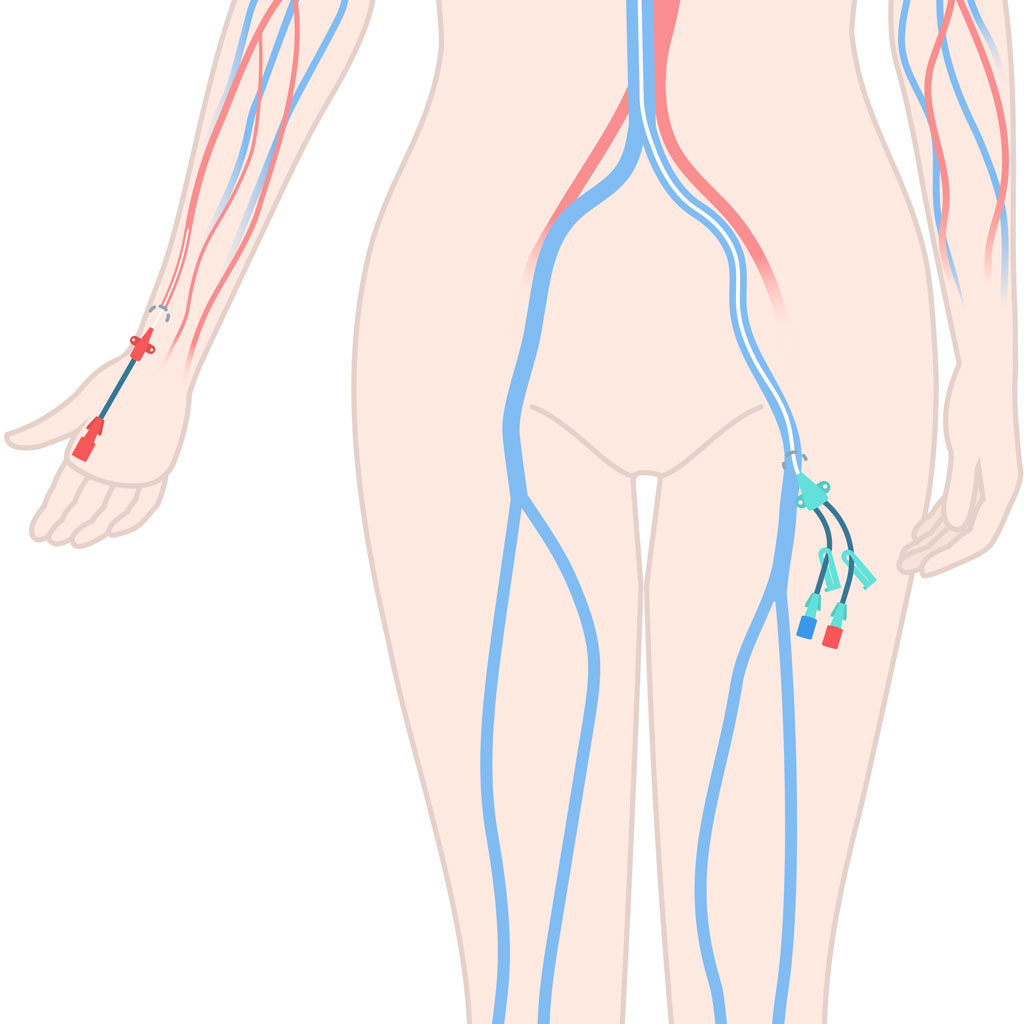
The two most common sites are wrist vs. groin access for embolization:
Radial access – The physician enters through the radial artery located in the wrist.
Femoral access – The physician enters through the femoral artery located in the groin.
Using real-time imaging guidance, a small catheter is navigated through the blood vessels to the area being treated. This allows physicians to perform a wide range of minimally invasive treatments without large incisions or major surgery.
Why Do Many Patients Prefer Wrist Access?
In recent years, radial access has become increasingly popular for many embolization procedures and vascular interventions.
1. Faster Mobility After the Procedure
One of the biggest advantages of wrist access is that patients can typically sit up and walk almost immediately after treatment.
Unlike some groin-based procedures, patients generally do not need to spend extended periods lying flat.
2. Increased Comfort
Many patients find radial access more comfortable during recovery because they can move around sooner and experience fewer restrictions after the procedure.
3. Lower Risk of Certain Bleeding Complications
The radial artery is located close to the skin and is easy to compress after treatment. Studies have shown that radial access is associated with lower rates of certain access-site bleeding complications compared with femoral access.
These advantages have helped make wrist access a preferred option for many patients undergoing interventional radiology procedures.
Why Is Groin Access Still Commonly Used?
Although radial access offers several benefits, femoral access remains an important and frequently used approach.
1. Larger Blood Vessel
The femoral artery is substantially larger than the radial artery. Certain embolization procedures require specialized catheters or equipment that are better suited for the larger vessel found in the groin.
2. More Direct Route to Some Treatment Areas
For some patients, femoral access provides a more straightforward pathway to the arteries being treated. This can improve procedural efficiency and reduce technical challenges.
3. Individual Anatomy Matters
Not all patients have wrist arteries that are large enough to safely accommodate every procedure.
Factors such as artery size, vessel narrowing, previous procedures, and natural anatomical variation can make femoral access the safer option in some situations.
Which Embolization Procedures Can Be Performed Through the Wrist?
Many common embolization procedures can be performed using radial access, including:
- Prostate Artery Embolization (PAE)
- Uterine Fibroid Embolization (UFE)
- Hemorrhoidal Artery Embolization (HAE)
However, not every patient is a candidate for wrist access. Your interventional radiology team will review your medical history, imaging studies, and vascular anatomy before determining the best approach.
How Does Your Physician Decide?
Choosing between radial access and femoral access involves careful planning.
Factors your physician considers include:
- The type of embolization procedure being performed
- The size and shape of your blood vessels
- Your height and body size
- Previous surgeries or vascular procedures
- The equipment required for treatment
- Overall procedural safety
The ultimate goal is to select the wrist vs. groin access for embolization that allows the procedure to be completed safely, efficiently, and successfully.
Is Wrist Access or Groin Access Better?
This is one of the most common questions patients ask.
The answer is that neither approach is universally better. Both radial access and femoral access have excellent safety records and are routinely used for minimally invasive treatments throughout the country.
The best access site is the one that provides the safest and most reliable path to treatment for your specific condition.
In some cases, wrist access may offer greater comfort and convenience. In other situations, groin access may provide a more direct and effective route for the procedure.
What Should Patients Expect?
Whether your embolization procedure is performed through the wrist vs. groin access for embolization, the site is typically only a few millimeters in size.
Unlike traditional surgery, interventional radiology procedures generally do not require large incisions, resulting in less pain, faster recovery, and minimal downtime for many patients.
Before your procedure, your physician will explain which access site is planned and why that approach was selected.
The Bottom Line
Both radial access and femoral access are proven methods for performing embolization procedures and other minimally invasive treatments.
While wrist access may offer advantages such as increased comfort and quicker mobility, groin access remains the preferred option for certain patients and procedures.
The decision is individualized and based on what will provide the safest and most effective outcome for you.
Learn More About Your Treatment Options
If you are considering an embolization procedure and would like to learn more about interventional radiology treatment options, the specialists at University Radiology Vascular & Interventional Center are here to help.
Our team evaluates every patient individually and develops a personalized treatment plan designed around safety, effectiveness, and long-term results.
Call (908) 874-9236 to schedule a consultation and learn whether a minimally invasive treatment may be right for you.